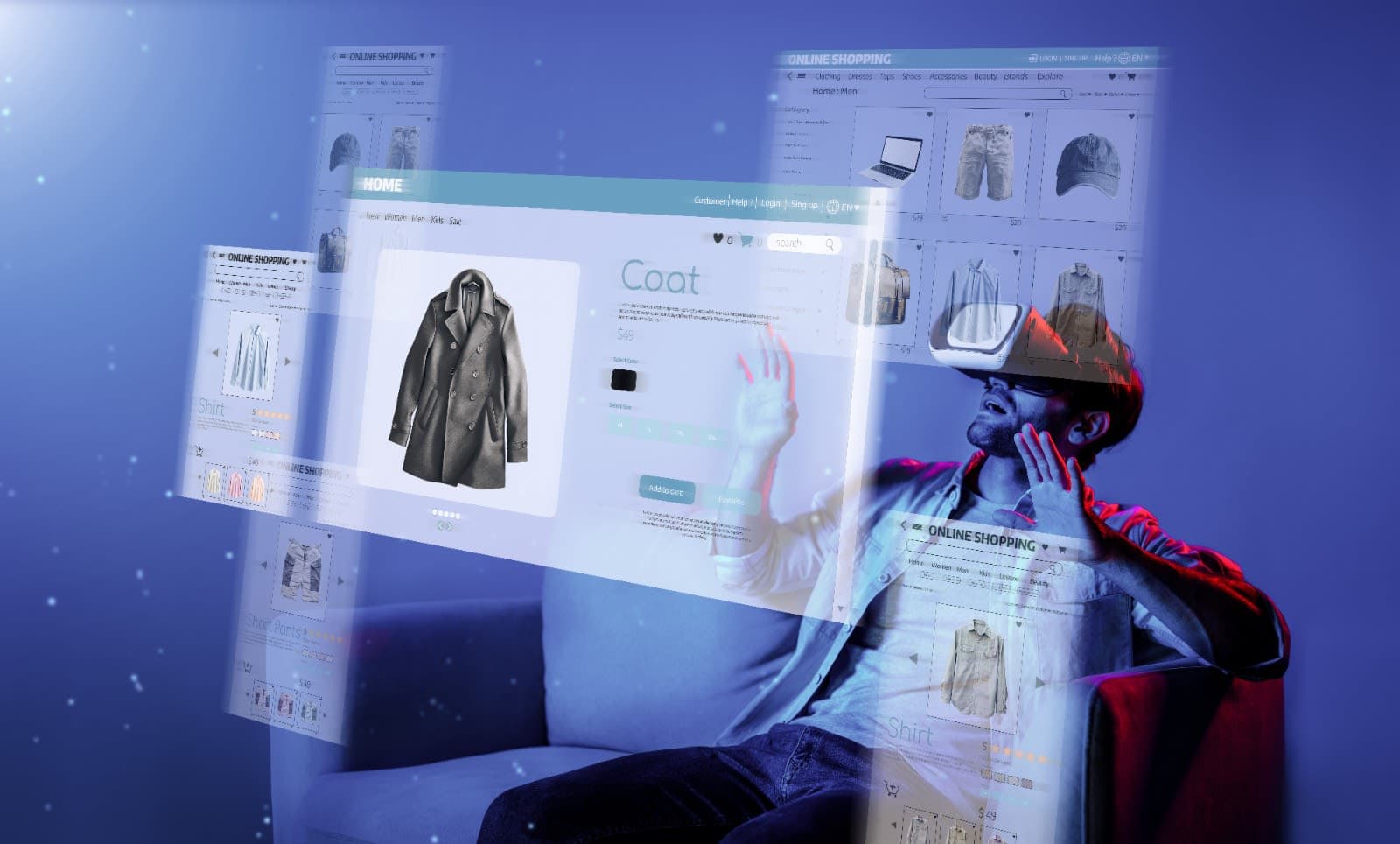
A store that surfaces the right product before the shopper has typed anything, takes payment in two taps, and starts picking the order while the tab is still open. That is not a concept video. Several of the largest retailers already run that way today, and the gap between them and everybody else is where most e-commerce budgets are quietly going, quarter after quarter, with very little of it announced.
Three things are doing the work. AI automation, personalization that reacts while the visitor is still on the page, and fulfillment fast enough that nobody thinks about delivery dates. Brands with all three are pulling ahead. Steadily. Brands with none of them are competing on price against companies that simply know more about the customer than they do.
Villaex Technologies builds in all three areas. E-commerce development, AI automation services, and the cloud infrastructure consulting that holds the whole thing up.
What AI is actually doing in the storefront
AI stopped being a back-office tool in retail some time ago. Front of house now. It sits in the parts of the shop your customers actually touch.
Recommendation engines are the most visible example. Amazon's has driven a substantial share of its sales for years. Machine learning models predict what a customer wants before the search box gets used. Dynamic pricing runs alongside it, moving prices against supply, demand, competitor behavior and what the shopper has already done in this session, so margin holds without the sale being lost to a rival who happened to reprice an hour earlier. Chatbots take the routine questions. Most of them. They answer instantly, collect data while they do it, and steer the conversation towards a purchase with nobody stepping in. And behind all of that, predictive analytics gives brands like Zara a sharper read on what will sell, which keeps overstock down and the supply chain leaner.
We build AI chatbots and personalization engines for this part of the journey. Browsing starts to feel less like searching and more like being served.
Personalization stopped being a nice touch
Personalization once meant a first name at the top of an email. Nobody means that now. It means product suggestions that follow browsing habits, a homepage assembled differently for each returning visitor, and a discount that fires when somebody abandons a cart rather than on the first of the month.
Netflix, Spotify and Nike set that expectation, and your customers carry it into your shop whether you have earned it or not. Meeting it takes three things at once. Customer behavior and purchase history modeled properly. An experience that adapts while the visitor is still on the site. Consistency across web, mobile, email and social, so the same person is recognized wherever they turn up.
Our e-commerce platform development work is built around exactly those frameworks, because retrofitting personalization onto a platform that was never designed for it is where most of these projects quietly stall. A first-time visitor should get a store that looks arranged for them. Every time.
Speed is the loyalty lever
Customers want the product. They want it now. One-click checkout removes the last bit of friction between intent and payment. Two taps. Same-day models such as Amazon's Prime Now and Walmart's Express Delivery reset what counts as normal, and every other retailer now gets measured against that standard whether they signed up for it or not, whether they can afford it or not.
Real-time inventory syncing matters as much. Nothing loses a sale faster than an item that shows as available and turns out not to be. Ask anyone who has had to send that email.
The part nobody puts in the pitch deck
All of this rests on infrastructure. The unglamorous half. Cloud infrastructure consulting and DevOps cloud services are what let a business scale, sync and fulfill at that speed, and without them the personalization layer is a demo that falls over on a busy Friday. Villaex Technologies builds cloud-native e-commerce systems that tie inventory, fulfillment and the customer experience together instead of bolting them to each other later.
Where this goes next
Four shifts look likely to matter most over the next few years:
- Voice commerce, with a growing share of purchases placed through voice assistants
- Augmented reality shopping, which turns try-before-you-buy into an ordinary part of shopping
- AI-powered hyperlocal logistics, pushing delivery windows down towards minutes
- Blockchain for supply chain transparency, especially for luxury goods where authenticity is the product
Start early on any of these and you set terms instead of reacting to them. Villaex Technologies covers AI, blockchain, custom web application development and cloud optimization, which is roughly what future-proofing an e-commerce platform requires in practice. What we hand over is a working system built to grow with the brand attached to it, and to be maintained by whoever inherits it. It has to survive its second year.
Common questions
How does AI improve e-commerce personalization?
It reads customer behavior, preferences and past interactions, then turns that into product recommendations, customized content and predictive search suggestions while the person is still on the page. All of it live.
Why is instant fulfillment critical for online retailers?
It builds loyalty and cuts cart abandonment. It also meets a delivery expectation customers already hold, and a shop that cannot meet it competes at a disadvantage no discount really fixes.
How can small businesses afford AI automation?
Affordable AI automation services exist for exactly this. Villaex Technologies makes it possible to start small and scale up, without a budget the size of an enterprise IT department.
Building something like this?
Tell us what runs today and where it hurts. An engineer reads it and replies.