Digital Transformation

Modernize the business without stopping it

We help established companies replace aging systems, automate operations, and embed AI and data into how they run. We work pragmatically, in stages that deliver value along the way, without the big-bang risk that sinks most transformations.

OverviewSoftware · Digital Transformation

Transformation succeeds when it's a sequence of deliverable wins

Digital transformation has a bad reputation, and often a deserved one. Too many initiatives are conceived as massive, multi-year, all-or-nothing programs: rip out everything, replace it with something new, and hope it works on the far side. They run over budget, miss their goals, disrupt the business, and frequently collapse under their own weight. The technology is rarely the reason they fail. They fail because they're structured as one enormous gamble instead of a sequence of deliverable wins.

Done well, digital transformation is the pragmatic, ongoing modernization of how a business runs: its systems, its processes, and its use of data and AI. It means replacing the legacy software that's expensive to maintain and impossible to extend; automating the manual operations that drain time and introduce errors; unifying data that's scattered and contradictory; and embedding intelligence into decisions and workflows. The goal isn't technology for its own sake. It's a business that moves faster, costs less to run, and can compete in a market where digital capability is increasingly the differentiator.

The pressure is real. Established companies face competitors who are digital-native and unburdened by legacy. Customers expect the same instant, intelligent experiences they get everywhere else. Operating costs are under scrutiny, and manual processes are an obvious target. And AI has raised the stakes again, rewarding companies whose data and systems are ready to use it and leaving behind those whose aren't. Standing still is the riskiest option of all.

Villaex approaches transformation as a series of wins. We modernize in stages, each delivering real value and reducing risk: replacing systems incrementally, automating processes one at a time, building the data foundation that everything else depends on, and embedding AI where it pays off. We keep the business running throughout, because a transformation that disrupts operations isn't a success no matter how modern the result. The outcome is a business that's measurably faster, leaner, and ready for what's next, achieved without betting everything on one leap.

PipelineSoftware

From input to outcome

How a platform gets from an operational problem to a system your team owns, with a reviewable artefact at every handover.

Process mapping

Workshops map the real workflow, its constraints and the metric that moves.

In
Your operation
Out
Scoped requirements

Architecture

Data model, services and integrations are designed before code is written.

In
Scoped requirements
Out
Technical design

Build & test

Two-week iterations, automated tests and review on every increment.

In
Technical design
Out
Release candidate

Live platform

Shipped with CI/CD, observability, backups and a rehearsed rollback.

In
Release candidate
Out
Running system

Feedback edge

Production telemetry and usage set the scope of the next iteration.

Where this work usually breaks down

The forces driving transformation, and the ways it usually goes wrong.

Legacy systems as anchors

Aging software that's costly to maintain, impossible to extend, and a growing security risk.

Manual operations

Processes held together by spreadsheets and human effort that don't scale and can't compete.

Fragmented data

Information scattered across systems, so the business runs on guesswork instead of insight.

Digital-native competitors

Rivals unburdened by legacy moving faster and meeting customer expectations you struggle to match.

Failed past attempts

Scars from big-bang transformations that overran, disrupted, and underdelivered.

Not ready for AI

Systems and data that can't support the AI capabilities competitors are already using.

Our approach

We modernize pragmatically: value early, risk low, business uninterrupted.

Incremental modernization

Replacing legacy systems in stages, each stage delivering value, with operations running throughout and no rip-and-replace cutover to gamble on.

Operations automation

Automating manual processes one high-impact area at a time, compounding returns.

Unified data foundation

Bringing scattered data together into a trustworthy basis for decisions and AI.

Embedded intelligence

Adding AI and automation in the places where they create real leverage.

A pragmatic roadmap

A sequenced plan tied to business outcomes, so every stage justifies the next.

Selected Work

Proof, in production

Real systems, shipped and running: the interface, the data model, and the workflows they replaced.

ERP · Trading Business

One management system for stock, sales, purchasing and books

Tradivoo is a management system for trading and production businesses: products, vendors and customers, purchasing and landed cost, inventory across warehouses, point of sale, ledgers and books. The dashboard reads revenue, margin and receivables from the same records the operations run on.

  • Purchasing, inventory, sales and accounting on one data model
  • Multi-warehouse stock and point of sale
  • Ledgers and books that reconcile to operations
app.tradivoo.com/dashboard
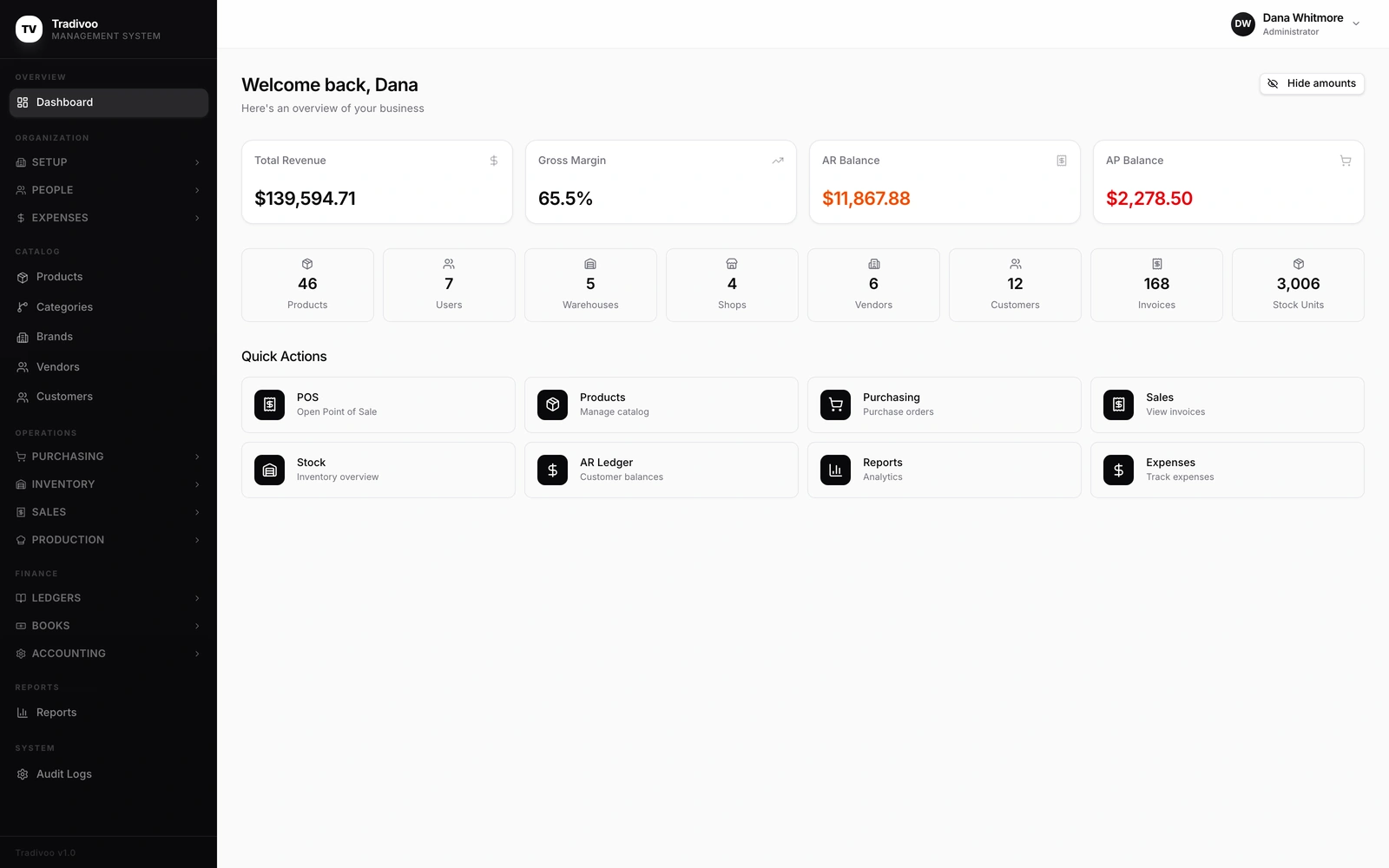
Tradivoo management dashboard with revenue, margin, receivables and quick actions
HR Platform · Multi-tenant HRIS

The employee record everything else reads from

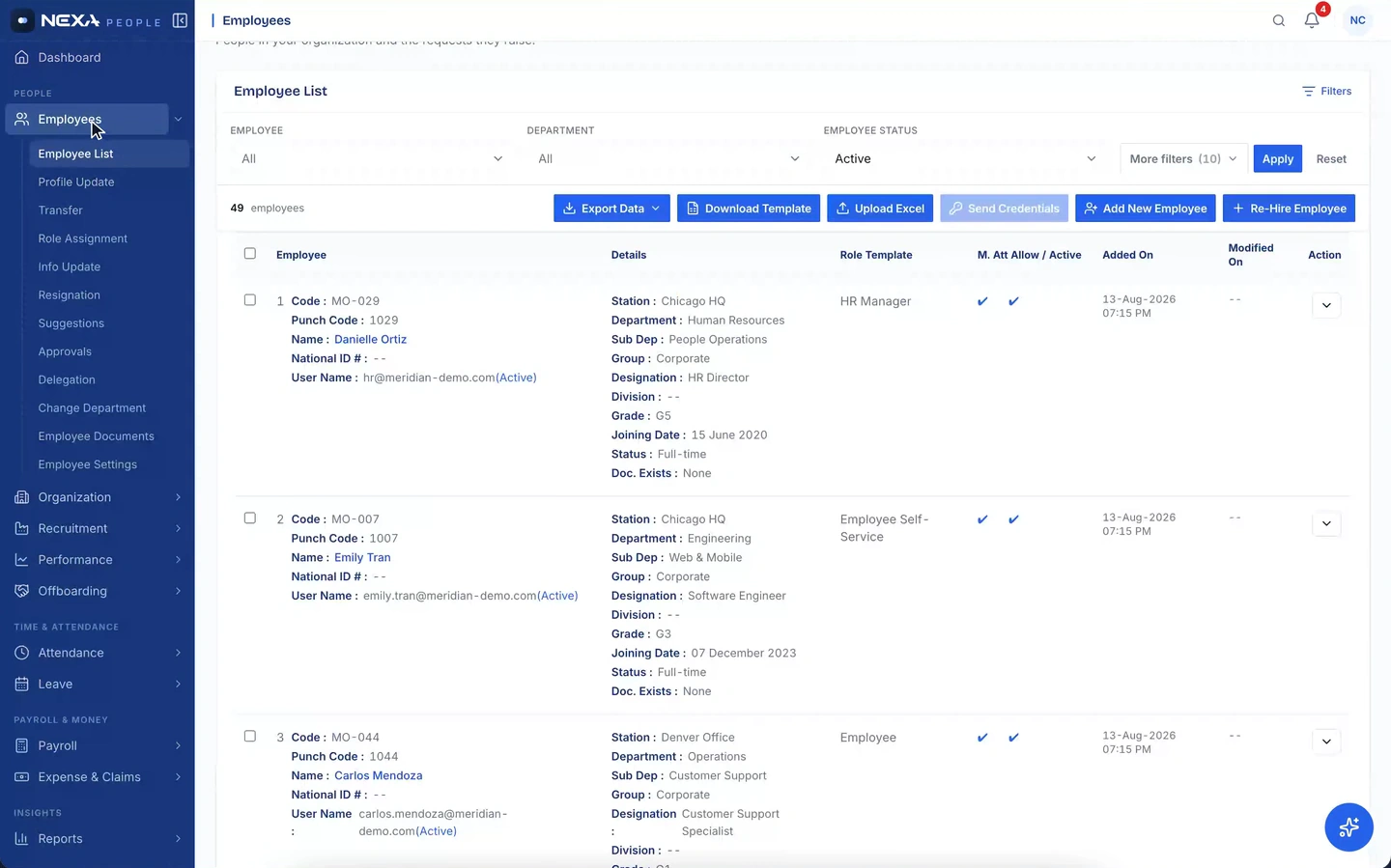
Nexa People is a multi-tenant HR platform. The employee list holds codes, roles, stations, departments and documents, with filters, bulk import and credential sending built in. Attendance, leave, payroll and performance all read from this one record.

  • Filterable employee directory with role templates and documents
  • Bulk import, export and credential sending
  • One record feeding attendance, leave, payroll and performance
app.nexapeople.com/people/employees
Nexa People employee directory with filters and role templates

What we build and deliver

The full scope of modernization, delivered in stages.

Legacy Re-architecture

Re-architecting aging systems for performance, security, and extensibility.

System Replacement

Replacing aging systems module by module where re-architecting them won't be enough.

Process Automation

Automating manual operations to cut cost, errors, and the work that doesn't scale.

Data Unification

Bringing fragmented data into one trustworthy foundation for decisions and AI.

AI Enablement

Embedding intelligence into workflows and decisions where it creates real leverage.

Cloud Migration

Moving workloads to scalable, modern infrastructure, modernizing where it adds value.

Integration

Connecting old and new systems so the business runs as one coherent whole during the journey.

Use cases

Where it creates value

Transformation matched to the business's real pressure points.

Enterprise

Legacy replacement & consolidation

Expensive, brittle legacy systems retired in stages. The sprawl they leave behind is unified into one coherent, modern platform. Operations keep running while it happens.

Operations

Operational modernization

Manual processes cap both growth and quality. Automating and digitizing them lifts that ceiling.

Established SMB

Catching up

Closing the digital gap with native competitors, pragmatically and affordably.

Data-rich firms

Data activation

Turning fragmented data into a foundation for analytics and AI.

Regulated

Compliant modernization

Modernization that works within the constraints of a regulated industry. Every change stays safe and defensible.

Business outcomes

The return on the work

What pragmatic transformation returns.

Lower
Operating costAutomation and modern systems that cut the cost of running the business.
Faster
OperationsProcesses and decisions that move at the speed the market now demands.
Ready
For AIA modern data and systems foundation that enables what's next.
Lower
RiskStaged change that delivers value early and never bets the business on one leap.
How we deliver

How the work actually runs

Assess, prioritize, and modernize in stages: value early, business uninterrupted.

  1. Discovery

    We start by understanding the business, not the brief. Workshops with your team map goals, constraints, data, and the metrics success will be measured against, before anyone writes a line of code.

  2. Planning & Architecture

    We translate the problem into a system: data flows, model choices, interfaces, integrations, and a delivery plan broken into milestones you can evaluate at each step.

  3. Design

    Experience and technical design happen together. We prototype the critical flows early so stakeholders can react to something real instead of a slide deck.

  4. Development

    Senior engineers build in tight, two-week iterations. Every increment is reviewed, tested, and demoed, so progress is visible and course-corrections are cheap.

  5. Testing & QA

    Automated tests, security reviews, performance profiling, and human QA run continuously, not as an afterthought. We ship when it's genuinely ready.

  6. Deployment

    We harden infrastructure, set up CI/CD, observability, and rollback safety, then ship to production with a launch plan that protects uptime and data.

  7. Support & Scale

    After launch we monitor, optimize, and evolve. As usage grows, the architecture grows with it, and the same team that built it keeps it healthy.

The stack we build on

Modern Application

Next.jsReactNode.jsPythonPostgreSQL

Cloud & Infra

AWSAzureGCPKubernetesTerraform

Data & AI

SnowflakedbtAirflowOpenAIAnthropic

Integration

APIsEvent streamingiPaaSLegacy adapters

Industry coverage

ManufacturingFinanceHealthcareRetailLogisticsInsurancePublic Sector
FAQ

Questions we get before we start

Still unresolved? A 30-minute conversation with an engineer usually settles it faster than another page of copy.

Usually because they're structured as one massive, all-or-nothing program: rip out everything and replace it in a big-bang cutover. That concentrates risk, disrupts the business, and collapses under its own weight. We modernize in stages that each deliver value and reduce risk, which is far more likely to succeed.

Not if it's done right. We design change to keep the business running throughout: incremental replacement, integration between old and new, and no big-bang gambles. A transformation that disrupts operations isn't a success, no matter how modern the result.

No, and you shouldn't. We modernize incrementally, starting with the highest-impact areas, so you see value early and the risk of each stage is contained. Some legacy systems may stay for a while, integrated with the new, until replacing them is justified.

We start with an assessment of your systems, processes, data, and goals, then prioritize by impact and feasibility. Often the data foundation comes first because so much else depends on it, but the right starting point depends on your specific pressures.

AI is increasingly a core part of it, but only on a foundation that's ready. We modernize systems and unify data first where needed, then embed AI and automation where they create real leverage, rather than bolting AI onto a broken foundation.

Because of how it's structured. Failed transformations are almost always big-bang gambles. We deliver in stages, each justifying the next, with the business running throughout, so you're never betting everything on one leap, and you can course-correct as you go.

It's ongoing rather than a fixed project, but because we work in stages, you see value within the first one, typically in a matter of weeks to a few months, and continue from there. You're never waiting years for a return.

Yes. We frequently work with internal teams, transferring knowledge and building capability so the organization can sustain and extend the modernization itself over time.

Now taking new projects

Modernize without the gamble.

Tell us what's holding your business back. We'll lay out a staged path that delivers value early and keeps you running.