UI/UX Design

Design that's beautiful, and quietly does the work

We design digital products that look premium and perform, grounded in research, engineered for conversion, and built on design systems your team can scale. Where most design stops at pretty, ours earns its keep.

OverviewDesign · UI/UX Design

Good design isn't decoration, it's how the product works

Design is the part of a product people actually experience. Everything else (the architecture, the database, the algorithms) is invisible; the interface is the product, as far as the user is concerned. And it's judged in seconds. A confusing, cluttered, or generic experience costs conversions, support tickets, and trust before anyone appreciates the engineering underneath. A clear, beautiful, intuitive one does the opposite: it makes the product feel effortless, trustworthy, and premium. The difference is design, and good design is far more than how things look.

UI/UX design is the practice of designing digital products to be useful, usable, and desirable. UX (user experience) is about how the product works: the flows, the information architecture, the logic that makes complex tasks feel simple. UI (user interface) is how it looks and feels: the visual design, the typography, the motion, the polish. Underneath both is research (understanding the people who'll use it) and design systems (the reusable components and rules that keep a growing product consistent). Together they determine whether a product is a joy or a chore to use.

The business stakes are concrete. Better UX directly lifts conversion, activation, and retention. Every point of friction removed is revenue retained. Better UI builds the trust and brand perception that let you charge a premium and stand out in a crowded market. And a real design system lets the product grow without becoming an inconsistent mess, keeping velocity high as the team scales. Design isn't a cost center that makes things pretty; it's a lever on the metrics that matter.

Villaex designs products the way the best teams do: research and strategy first, then experience and interface design together, then a handoff that engineers can actually build, because the same team often builds it. Aesthetics are the surface; underneath we design for conversion and clarity, and we deliver design systems your team can extend. The result is a product that feels premium, performs measurably better, and stays consistent as it grows.

PipelineDesign

From input to outcome

How research becomes an interface people can actually use, and how the numbers afterwards feed the next round.

Discovery

Users, goals and constraints are established before anything is drawn.

In
Your users
Out
Research findings

Design

Flows, interface systems and prototypes, reviewed against real tasks.

In
Research findings
Out
Design system

Build

Engineered to the design: accessible, responsive and measurably fast.

In
Design system
Out
Shipped interface

Measure

Instrumented, tested with real users and refined against the numbers.

In
Shipped interface
Out
Validated experience

Feedback edge

What the measurement shows re-enters design as the next set of changes.

Where this work usually breaks down

The design problems that hold products back are usually invisible until you name them.

Confusing experiences

Products where users can't find or finish what they came to do, costing conversion and goodwill.

Generic, off-brand look

Template-grade interfaces that make a serious product feel forgettable and cheap.

Pretty but ineffective

Designs that win awards but don't convert, because aesthetics came before usability.

Inconsistent product

A growing product that drifts into a patchwork of mismatched patterns with no system.

Designs that don't ship

Beautiful mockups that engineers can't faithfully build, lost in a broken handoff.

No user understanding

Design driven by internal opinion instead of evidence about real users.

Our approach

We design for outcomes, with the rigor to make it real.

Research & strategy

Understanding users, goals, and context first, so design solves real problems.

UX that simplifies

Flows and information architecture that make complex tasks feel effortless.

Premium, on-brand UI

Distinctive visual design and polish that make the product feel like a category leader.

Conversion-focused

Clear hierarchy and intentional CTAs designed to move users toward action.

Scalable design systems

Component libraries and rules that keep the product consistent as it grows.

Engineering-ready handoff

Specs and assets engineers can build faithfully, and we often build them ourselves.

Selected Work

Proof, in production

Real systems, shipped and running: the interface, the data model, and the workflows they replaced.

Voice Assistant · Consumer Mobile

A morning briefing you can talk to

Ping Me is a voice-first capture app on Google Play. You speak a task, a reminder or an idea, the app works out which of the three it is, files it with a date and time, and pings you at the right moment. The briefing screen then ranks the day so the first thing you see is what actually matters.

  • Spoken input classified as a task, a reminder or a note
  • A daily briefing that ranks the day's priorities
  • Dates, repeat rules and calendar sync set by voice, not forms
9:41
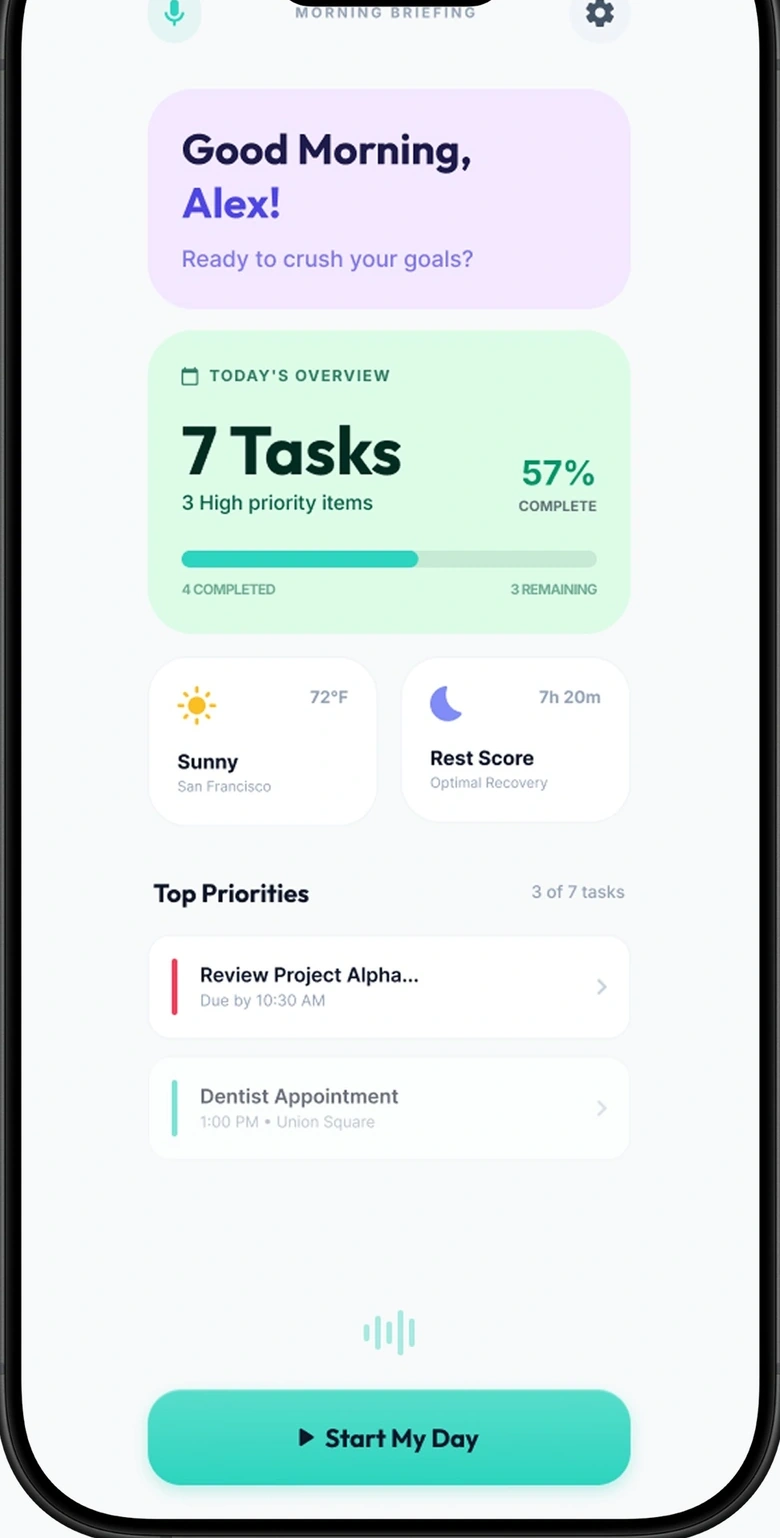
Ping Me morning briefing with the day's task count and top priorities
Product Redesign · B2B SaaS

A redesign that doubled trial-to-paid

A powerful B2B product was notoriously hard to use: confusing onboarding, buried features, a dated interface undercutting enterprise sales. We researched the friction, redesigned the core flows and onboarding, refreshed the UI to feel premium, and delivered a design system their team could build on.

  • Research-led redesign of onboarding and core flows
  • Premium, on-brand interface that lifted perception
  • A scalable design system for consistent velocity
app.usenorthstar.com/mobile-app-v3

Mobile App v3

18 openFilterDisplay
In Progress4
NS-341Offline cache invalidation on session refreshbugRK
NS-338Onboarding checklist: empty state copydesignMA
NS-330Persist workspace switcher orderJL
NS-327Rate-limit avatar upload endpointapiTL
Todo8
NS-352Bulk assign from the board context menuMA
NS-349Keyboard shortcut sheet (⌘/)polishJL
NS-346Migrate legacy notification preferencesRK
NS-344Sync push tokens on account switchmobileTL
NS-340Trim bundle: drop legacy date libraryJL
NS-336Audit log export as CSVMA
NS-333Empty search results: suggest filtersdesignMA
NS-329Retry webhook deliveries with backoffRK

What we build and deliver

End-to-end product design, from insight to interface.

UX Research

User research, journey mapping, and testing that ground design in evidence.

UX & Flows

Information architecture and interaction design that make complex products feel simple.

UI & Visual Design

Premium, distinctive interface design with the polish that signals quality.

Design Systems

Reusable component libraries and guidelines that scale with the product.

Prototyping

Interactive prototypes that let you test and feel the product before it's built.

Conversion Design

Funnel and landing design engineered to lift the metrics that matter.

Use cases

Where it creates value

Design that drives the outcome each product needs.

SaaS

Product UX

Designing complex software so that it feels simple to use. Activation and retention follow.

Startups

Product design from zero

Designing a new product end to end, fast, with a system that scales.

E-commerce

Conversion design

Storefront and checkout design engineered to lift conversion and order value.

Enterprise

Complex tool design

These tools are dense and powerful. The people who live in them still need to get through the work. We design for genuine usability at that density.

Marketing

Landing & funnel design

High-converting pages that turn traffic into pipeline.

Redesigns

Product refresh

Modernizing a product that has aged. What existing users rely on stays where they expect it.

Business outcomes

The return on the work

What great design returns.

↑
Conversion, activation, retentionFriction removed and clarity added, directly lifting the funnel. And products people enjoy using are products they keep using.
Premium
Brand perceptionPolish and craft that let you stand out and charge accordingly.
Faster
DevelopmentDesign systems that make building consistent UI quick and reliable.
How we deliver

How the work actually runs

Research, design, and validate, with a handoff that ships.

  1. Discovery

    We start by understanding the business, not the brief. Workshops with your team map goals, constraints, data, and the metrics success will be measured against, before anyone writes a line of code.

  2. Planning & Architecture

    We translate the problem into a system: data flows, model choices, interfaces, integrations, and a delivery plan broken into milestones you can evaluate at each step.

  3. Design

    Experience and technical design happen together. We prototype the critical flows early so stakeholders can react to something real instead of a slide deck.

  4. Development

    Senior engineers build in tight, two-week iterations. Every increment is reviewed, tested, and demoed, so progress is visible and course-corrections are cheap.

  5. Testing & QA

    Automated tests, security reviews, performance profiling, and human QA run continuously, not as an afterthought. We ship when it's genuinely ready.

The stack we build on

Design

FigmaFramerDesign tokens

Systems

Component librariesshadcn/uiStorybook

Research & Testing

User interviewsUsability testingAnalytics

Handoff & Build

Next.jsReactTailwind CSSMotion

Industry coverage

SaaSFintechE-commerceHealthcareEnterpriseMediaStartups
FAQ

Questions we get before we start

Still unresolved? A 30-minute conversation with an engineer usually settles it faster than another page of copy.

UX (user experience) is about how a product works: the flows, structure, and logic that make it useful and usable. UI (user interface) is about how it looks and feels: the visual design, typography, and polish. They're deeply intertwined; great products need both, plus the research underneath. We do all of it.

Yes, measurably. Better UX lifts conversion, activation, and retention directly; better UI builds the trust and brand perception that let you charge a premium. Design isn't decoration. It's a lever on the metrics that matter, and the return usually dwarfs the cost.

Both. We ground design in research, understanding real users and goals, so we solve actual problems rather than designing on opinion. Then we handle UX and UI through to a build-ready handoff.

A design system is a reusable library of components and rules that keep a product consistent and fast to build as it grows. If your product is evolving and your team is building UI repeatedly, a design system pays for itself quickly by preventing inconsistency and speeding development.

Yes. We assess what's working and what isn't, then modernize the experience and interface without throwing away what users rely on, improving conversion and perception while respecting existing behavior.

Yes, that's a core requirement, not an afterthought. We deliver engineering-ready specs and assets, and because we often build the product too, the handoff is faithful rather than aspirational.

Both. Many clients value that design and engineering come from one team, so the product that ships matches the design that was approved. We can design only, or design and build.

A focused product design effort typically takes four to eight weeks; a full design system or large product, longer. We work iteratively, so you see and steer the design throughout.

Now taking new projects

Design that earns its keep.

Show us your product or your idea. We'll design something premium that measurably performs, and that we can build.