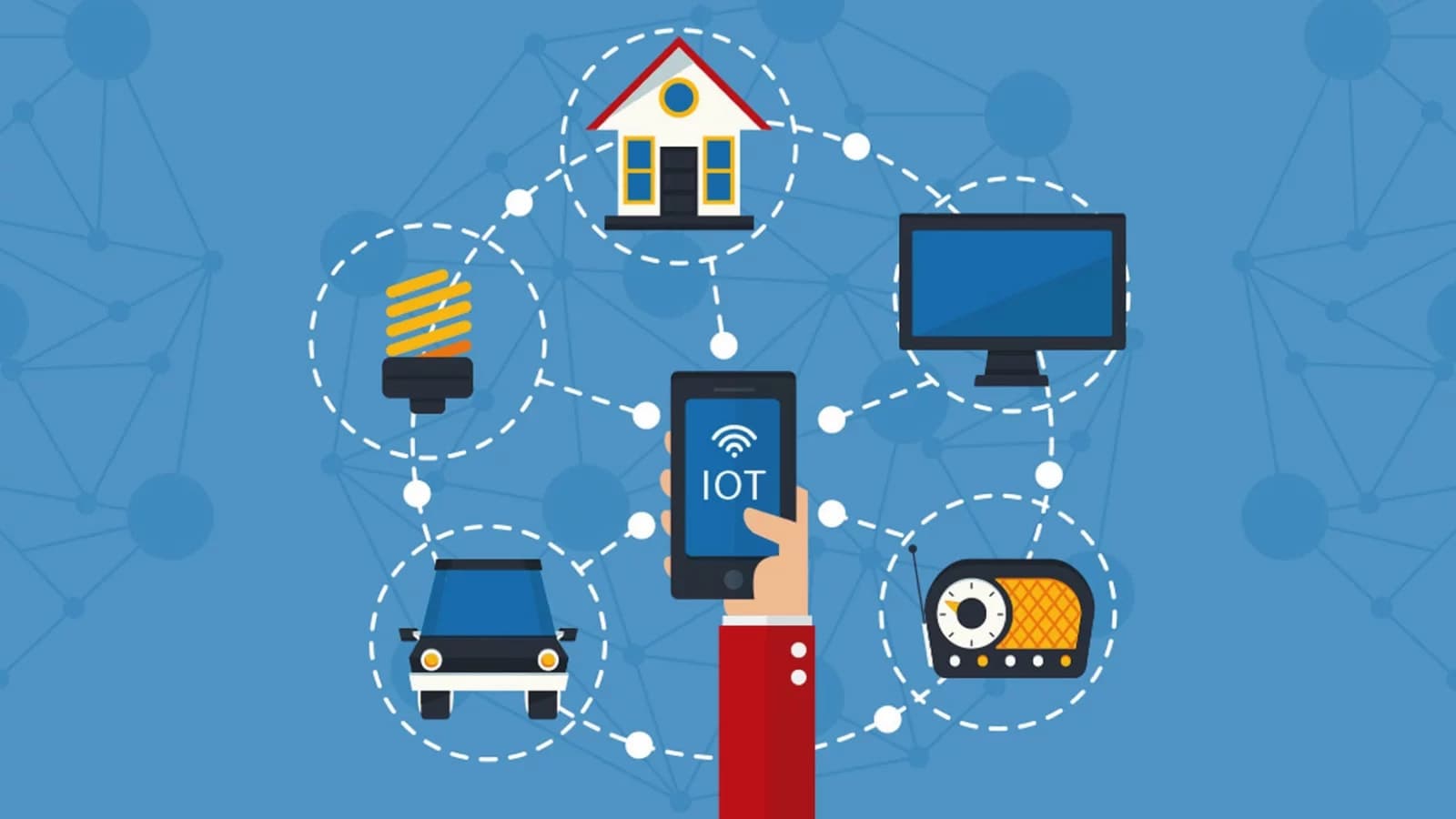
The Internet of Things rests on a plain idea: ordinary objects, from a thermostat to a bin to a tractor, can be put on a network and made to exchange data. That idea has now been applied to most parts of daily life. The results are less dramatic than the marketing and considerably more useful than the sceptics allow, since things that used to need checking now check themselves, and things that used to be guessed at get measured instead. What follows is a tour. It covers where this has already changed how people live, work and deal with their surroundings.
An old idea, applied everywhere
The connected home is the most familiar version. A smart thermostat learns the temperatures a household actually wants and holds them there, weighing energy efficiency in the background without anybody having to think about it. Appliances, lighting and security systems join the same network, which puts control in one place and makes it reachable from anywhere, so homeowners cut energy use, tighten security and handle the small daily adjustments by voice or through a phone app, from the sofa or from another country. Televisions, speakers and streaming devices sit on those same platforms, so the entertainment system answers the voice that turns the heating down, and content recommendations built on viewing habits take care of the rest. That last one is modest next to anything else here. It is also the part most people use every day.
Health monitoring has moved out of the clinic on the back of the same technology. The argument there is stronger than convenience. Wearable devices with sensors track vital signs, activity levels and sleep patterns, and their value lies in the continuity rather than in any single reading, because one blood pressure measurement taken in a consulting room tells a doctor far less than three months of them taken at home. That data reaches healthcare providers in real time, which counts most for patients with chronic conditions, where an intervention arriving two days earlier is a different outcome entirely. Remote monitoring and personalized tracking also hand people a proactive role in their own well-being.
Traffic, cities and the services underneath them
Cars measure themselves now. They gather real-time data on traffic, road conditions and their own performance. Navigation built on that data routes around congestion instead of into it, and fuel efficiency improves as a side effect of saving time. Roads are getting the same treatment: traffic lights that respond to actual flow rather than to a fixed cycle, parking systems that know which spaces are free. All of it doubles as groundwork for autonomous vehicles, which need precisely this kind of environmental data to function at all.
A smart city is one where separate services are instrumented and connected to each other. That sounds abstract until you look at what it does to a municipal budget. Sensors in streetlights, waste management systems and utility grids allow real-time monitoring, so resources go where they are needed rather than where a schedule said they would be, and energy consumption, waste and public safety improve together. Planners work from evidence instead of estimates. The stated aim is a city that is more sustainable and more oriented around the people who live in it, which is a fair description of what happens when guesswork is removed from a dozen routine decisions at once.
Rubbish is the unglamorous example and an unusually well-suited one. Connected bins report how full they are, and collection routes get built from that rather than from a fixed timetable, which eliminates the trips made to empty bins and cuts fuel use across an entire fleet. The same infrastructure supports recycling, with real-time information about where facilities are and schemes that can verify and reward participation rather than simply encouraging it.
Energy changes character once it becomes visible. Smart meters and connected devices let households and businesses watch consumption as it happens instead of discovering it on a quarterly bill, and that visibility is what makes savings findable, since nobody changes a pattern they cannot see. IoT also ties renewable generation such as rooftop solar and wind turbines into the grid in a way that lets supply and demand be matched. That is much of what makes distributed generation workable.
Farms, factories and shops
Farming shows it plainest. Precision agriculture is one of the clearest wins in this whole survey. Sensors placed in soil report moisture, temperature and nutrient levels continuously, so irrigation runs when the crop needs it rather than when the calendar says so, and water waste drops while yields rise. Drones and autonomous robots take on crop monitoring, pest control and precision spraying, which removes a great deal of manual labour from operations that are chronically short of hands.
Industrial automation under the heading of Industry 4.0 puts machines, sensors and robots on one network, so production processes get optimized against real data, downtime falls, and quality becomes measurable per unit rather than per batch. Predictive maintenance is the headline application. Sensors watch how a machine behaves and flag the bearing that is about to fail, so it gets replaced during a planned stop instead of an unplanned one, which is the difference between an inconvenience and a lost week. The same monitoring covers hazardous environments and warns workers about conditions before those conditions turn into incidents.
In retail the change reaches the shop floor and the warehouse behind it. Smart shelves and beacons talk to a shopper's phone and offer product information, personalized recommendations and location-based deals as they walk the aisle, while IoT-driven inventory systems keep stock levels accurate and restocking timely. Further back still, tracking systems make shipments visible end to end. That is how a delay gets caught while there is still time to do something about it.
What it measures, and what it still gets wrong
Connected sensors measure air quality, water quality and biodiversity continuously, at intervals no field team could keep up with. That gives conservation work something it has always lacked: a baseline detailed enough to show what human activity is actually doing, and specific enough to locate a source of pollution rather than estimate it. The same networks feed early warning systems for earthquakes, floods and wildfires, where every hour of response time saved shows up in the damage figures.
The list of applications keeps growing while the underlying issues stay open. Data privacy is the largest, since these systems produce a detailed record of how people live, and who holds that record matters enormously. Security comes next, because every connected device is another way in, and the weakest device on a home network quietly sets the standard for all of them. Interoperability is the quieter problem: a house full of devices that cannot talk to each other delivers a fraction of what a connected house should, and the same holds for a city assembled from systems that were bought separately. None of the three is solved. Getting the full value out of any of this depends on them being taken as seriously as the features are.
Villaex Technologies works on integrating IoT into everyday operations and daily routines. If you want to talk through what that would look like for yours, our website has the details and a way to reach us.
Building something like this?
Tell us what runs today and where it hurts. An engineer reads it and replies.