The Digital Identity Crisis
Identity fraud is an operating cost now. Banking, healthcare, government services and social media all run on personal data. That data sits in systems that keep getting breached. Every breach makes the next impersonation easier.
Traditional identity management is the reason. Records are centralized. Credentials get reused. Data handling is opaque, and patching that model has not worked. Secure blockchain solutions are the answer that has held up. The appeal is structural rather than fashionable: a ledger held across many machines has no central copy to steal, and a record written into it can be checked later by anyone who needs to, without asking the company that issued it.
At Villaex Technologies we build blockchain solutions, smart contracts and decentralized systems for digital identity. Businesses use them to protect customer identities and cut fraud.
What Identity Management Has to Do
Digital identity management covers the methods and processes used to authenticate, authorize and store user identities. Login credentials sit inside it. So do financial details, healthcare records and government-issued IDs.
Three pressures make it urgent. A centralized database is one rich target, and a single successful hack exposes everything in it. Users want to decide who sees their information. Regulators have made the question a legal one, and GDPR, HIPAA and CCPA all carry penalties for handling it badly. None of this gets answered by better passwords or a larger security budget, because the weakness is in the shape of the system, where one organization holds everything and every user has to trust it completely.
A tamper-proof, decentralized approach answers all three. That is why blockchain keeps coming up.
Decentralization
A blockchain is not held by one company. It runs across a distributed network of nodes. There is no single database to breach. There is no single administrator to compromise.
Records written across those nodes cannot be quietly modified. Transactions are irreversible once committed. Encryption and cryptographic hashing protect the data underneath. None of that makes a system unbreakable, but it moves the attack from a single database that one stolen credential opens to a network where an intruder would have to rewrite the same history on many machines at once.
Estonia's e-Residency program uses blockchain to securely manage citizens' digital identities, significantly reducing identity theft and fraud.
We build this layer for organizations holding sensitive data. Proving a record has not been altered is worth as much as keeping it private.
Self-Sovereign Identity and Smart Contracts
Self-sovereign identity gives people ownership of their own information. No intermediary holds it for them. The user decides who gets access.
The blockchain supplies cryptographic proof that a credential is genuine, so it can be verified without a central authority vouching for it. Proof can also be partial. Users hand over the one field a transaction needs instead of the whole record. Most identity systems still ask a person to produce a full document to prove one fact about themselves, and selective disclosure is the part of this that ordinary users notice first, because it ends that habit.
IBM's partnership with the Sovrin Foundation offers blockchain-based SSI solutions that help individuals securely manage their digital identities in sectors like healthcare and finance.
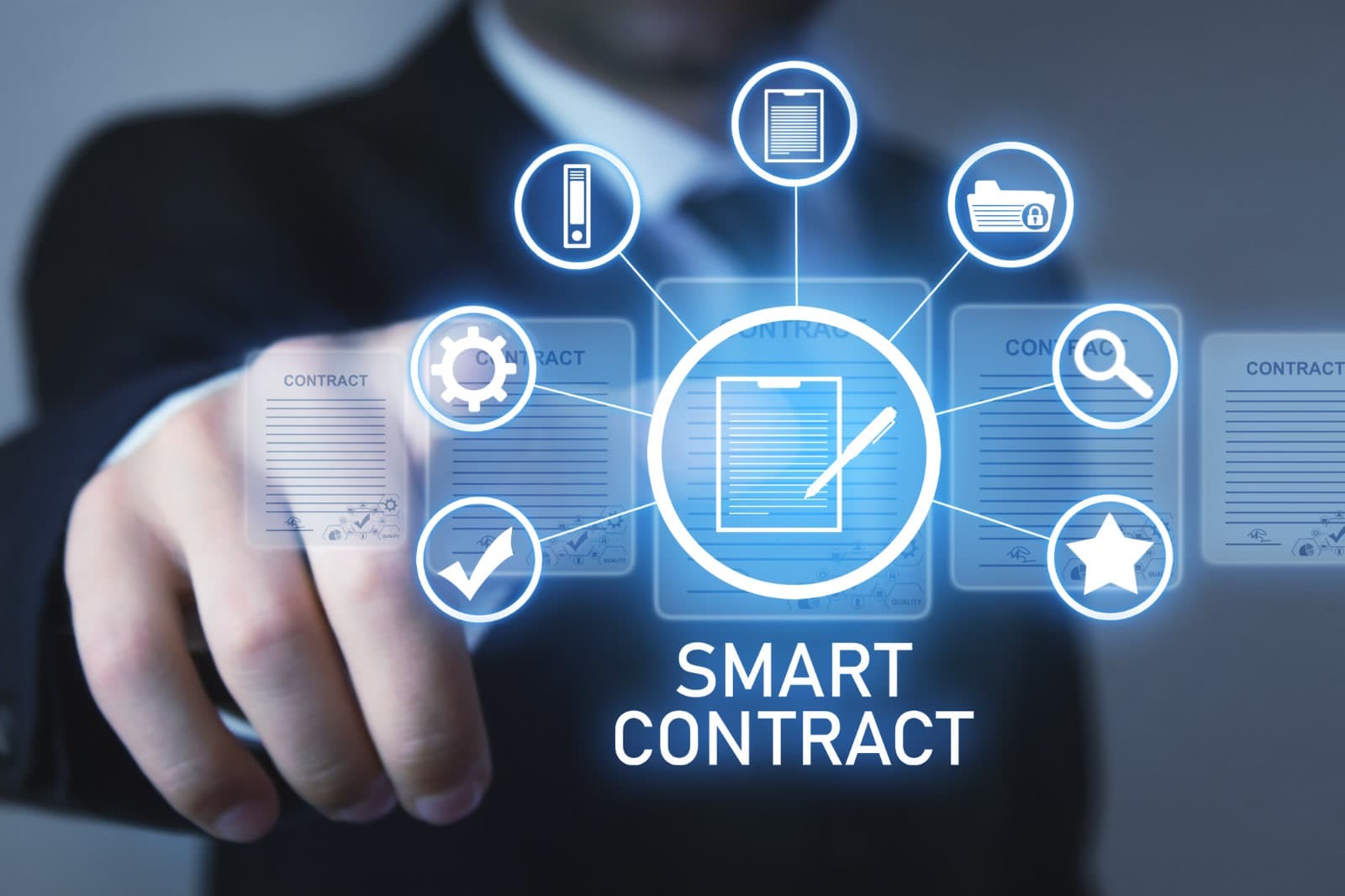
A smart contract is code that executes itself once its conditions are met. Applied to identity, it checks credentials instantly. No person routes the request. That removes human error, closes the window in which a record can be manipulated in transit, and takes out the cost of verifying by hand.
Financial institutions use blockchain-powered smart contracts to automate KYC (Know Your Customer) and AML (Anti-Money Laundering) compliance checks, improving both security and compliance.
We develop smart contracts that carry identity and compliance work. That is where most of the manual effort sits today, and most of the fraud risk with it.
Healthcare, and What to Do Now
Healthcare has the hardest version of the problem. Records have to move between institutions. They must never reach the wrong person. A hospital that cannot share a record quickly enough harms the patient, and a hospital that shares it with the wrong reader harms the patient differently, which is why the rules around health data are stricter than almost anywhere else.
Blockchain encrypts patient information so unauthorized access fails. Sharing between providers stays traceable. The whole arrangement holds up under HIPAA and GDPR.
Medicalchain uses blockchain technology to securely store patient medical records, giving patients full control over their data access permissions.
We build these systems for healthcare providers. Compliance is usually what decides the project.
The case comes down to five things:
- Decentralized storage removes the single point of failure.
- Users keep control of their own personal data.
- Immutable records can be checked by anyone who needs to.
- Cryptographic verification blocks the impersonation that identity theft depends on.
- Smart contracts absorb the repetitive compliance checks.
The direction is clear enough. Decentralized identity is spreading across financial, governmental and healthcare sectors. Blockchain is being paired with AI analytics to sharpen verification and fraud detection. Credentials are becoming interoperable, recognized across platforms rather than inside one vendor's walls.
Blockchain identity management already works in production, in the sectors with the least tolerance for failure. Businesses that need secure, transparent identity handling are deploying it now. The ones still deciding carry the breach risk while they decide.
Building something like this?
Tell us what runs today and where it hurts. An engineer reads it and replies.