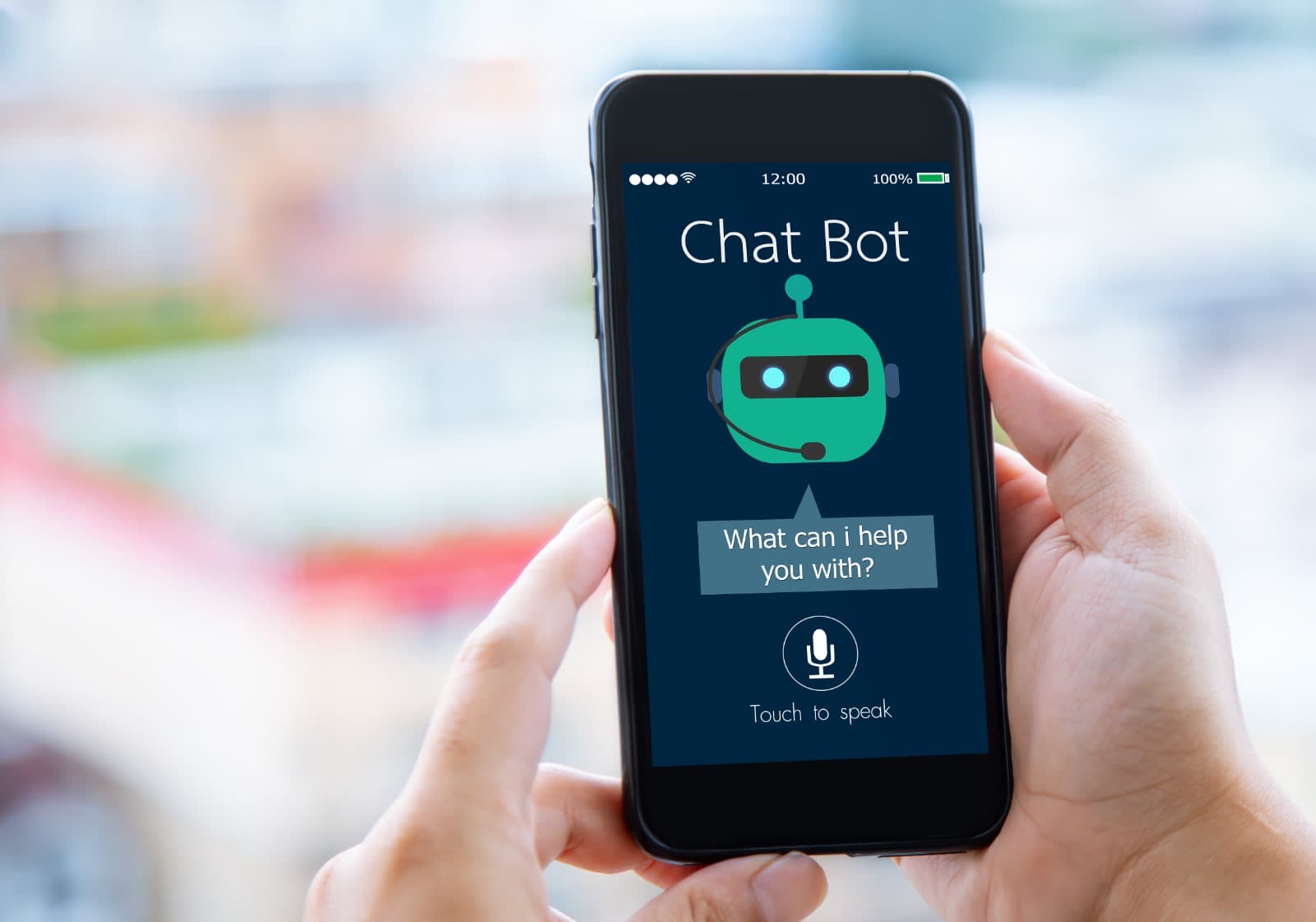
From FAQ page to conversion surface
A few years ago a chatbot was a glorified FAQ page with a text box stuck on the front, and nobody expected much from it beyond deflecting the same twenty questions. That is no longer what the word means. The systems going into production in 2025 read intent, hold context across an entire conversation, adjust to whoever is on the other end, and in a fair number of cases carry a sale all the way to checkout without a person joining the thread at any point.
We have watched the change from the inside. Villaex Technologies began by building support bots that answered a fixed set of questions, and the work now looks much more like building an omnichannel agent which sits between the customer and the CRM and gets judged on revenue and loyalty rather than on deflection rate. The older generation ran on static scripts and keyword triggers. Miss the keyword, get the wrong answer, and there was very little the bot could do about it afterwards. What ships today is built on natural language processing, machine learning and some form of persistent context, and that combination is what lets a bot read intent and emotional register, answer a returning customer differently from a first-time visitor, and run a multi-step process rather than a single lookup. It also writes back into the systems behind it, so the CRM, the ERP and the sales pipeline all stay in step with whatever the customer was just told. Calling these things chat tools undersells them badly. They are conversion surfaces, and companies increasingly treat them as business assets on the same footing as the app or the storefront.
The trends shaping chatbot work in 2025
Five things account for most of what clients ask us to build this year, and the first is that the chat window has become a funnel in its own right. A customer browses, asks for a recommendation, gets one drawn from what they have looked at before, and pays without ever leaving the thread; payment gateways and loyalty programs plug straight into that flow. H&M's bot is the example most people have already seen, helping a shopper assemble an outfit around their preferences, their budget and what they have bought in the past. The funnel is the thread.
The second is that bots have stopped waiting to be spoken to. Waiting for the user to type first leaves money on the table, so predictive models now watch for hesitation, for drop-off patterns, for the moment an upsell would actually land, and open the conversation there instead. In practice that is a nudge about an abandoned cart, a suggestion pulled from browsing history, or a discount put in front of somebody who has come back for a third look. We build these as behavior-driven triggers, which means the bot does something about the deal rather than waiting to be asked about it.
Third: language and tone. Multilingual NLP has made it reasonable to serve several markets from a single bot, removing a barrier that used to force a separate build per region, and sentiment analysis matters at least as much. A bot that can tell frustration from confusion will change its tone, offer a different next step, and hand over to a person before the customer gives up on the exchange entirely. The effect on the support queue is direct: fewer escalations, and better satisfaction in the markets where language was previously the obstacle. Fourth: text is no longer the only channel. Voice assistants pick up users who are driving, cooking or unable to read a screen comfortably, and voice-to-text paired with NLP covers a great deal of accessibility ground on its own. Video bots are newer, and they are turning up where the interaction benefits from a face: telemedicine, education, real estate walkthroughs.
The fifth trend is the least glamorous and by some distance the hardest to retrofit. Bots now touch payment details, medical history and identity documents, which puts them squarely inside GDPR, HIPAA and whatever else a given sector carries with it. Some teams have gone further still and put blockchain-based audit trails behind chatbot transactions so that every interaction can be verified after the fact. Retrofitting any of that is expensive. Our builds ship with enterprise-grade encryption as standard, and smart contract verification where a client's compliance position calls for it.
Deployment, and what separates a bot that converts
Support desks were the starting point rather than the destination. Sales teams now use bots to qualify leads while intent is still fresh, book the call straight into a rep's calendar, and put a product comparison or a short demo in front of somebody long before a human is involved. Internally, HR bots absorb the questions that arrive every week regardless of who is asking them: leave balances, benefits, payroll queries, and the induction somebody would otherwise repeat for the fifth time this month. In healthcare, bots triage symptoms ahead of an appointment, schedule visits, send reminders and deliver post-treatment instructions. In education and customer training they hand out short learning modules, track where a learner has got to, and adjust the study plan accordingly, which has made conversational tutoring inside the product itself entirely ordinary.
The bots that work have a few things in common, and almost none of them are about the model underneath. Most of it is plumbing. Decide first whether the goal is support, sales or retention, because a bot built for all three tends to be mediocre at each of them. Train it on a real knowledge base: FAQs, product data, and how customers have actually behaved rather than how somebody imagined they would. Give it a clean escalation path to a human, since the complicated cases are exactly the ones worth a person's time. Instrument it, then let the numbers rewrite the scripts and retrain the model on a schedule instead of after a complaint. And connect it properly, because a bot that cannot see inventory or a calendar will keep promising things that are untrue. We build modularly for that last reason above all: a bot which starts life as a support tool can pick up sales or scheduling later without being torn down first.
Somewhere in the last two years intelligent chat stopped being a differentiator and quietly became table stakes. It answers at three in the morning. It never tires of the same question, and it catches the conversions that used to leak away overnight while everybody was asleep. Deploying early counts for less than what the bot is then asked to do, and the companies pulling ahead have given theirs a part in selling and in keeping customers rather than only in closing tickets.
Agentic AI: systems that decide for themselves
A different class of system is now moving into production alongside all of this. Agentic AI does not wait for a prompt and a rule set; give it a goal and it reads its environment, forms a plan, acts on that plan, and revises the plan when the facts underneath it change. A product launch optimized end to end, with demand forecast, resources allocated and marketing tuned, without a person signing off on each step along the way, is roughly the shape of what these systems are being pointed at. The difference from conventional AI is autonomy. Traditional models want human inputs and rule-based decisions, while agentic systems are goal-driven, adaptive and capable of independent reasoning, and they are already changing how large organizations run and how quickly they can move. Conventional automation executes the task it was handed. An agent pursues an outcome, which is roughly the difference between autopilot and a co-pilot who changes the flight plan mid-air because the weather turned.
Finance and healthcare are both running experiments along these lines, aimed mostly at productivity, error rates and growth, and Villaex Technologies builds this kind of autonomy into enterprise systems, web applications, game engines and eCommerce platforms through our AI automation services. In manufacturing, agents watch machinery, predict downtime and reorder parts on their own, so delay and cost come out of the line without anyone filing a request first. In customer support the bot decides: it can issue a refund, escalate an issue or offer an upgrade based on tone and context, instead of pushing everything into a queue for a human to sort through later. In marketing, an agent will launch a campaign, read the performance as it arrives, shift budget between platforms and rewrite ad copy, collapsing work that took weeks of A/B testing into hours. And in decentralized finance, smart contracts are turning into smart agents, with autonomous protocols managing portfolios, liquidity pools and lending without a third party watching over them. Villaex builds smart contract solutions for that kind of autonomous finance.
Efficiency is the obvious gain, since decisions stop queuing behind a tired human or a misaligned workflow, and agility follows from it because a system reading the market continuously can also react to it continuously. Costs drop for the plain reason that there is less micro-management to pay for. Underneath all of that sits a competitive argument: firms deploying agents now will be ahead of the ones still approving every step by hand. The gap compounds.
Guardrails, fit, and where to start
Autonomy is not a licence. Four things need to be in place before an agent is given real authority over anything that matters. The goal it optimizes for has to match the business objective rather than some convenient proxy that happens to be easier to measure. Its reasoning has to be inspectable, so that somebody can explain afterwards why it did what it did. Sensitive functions need a human override that works when somebody reaches for it, and it should be tested before anybody needs it in anger. And bias mitigation, privacy protection and regulatory compliance belong in the build itself rather than in a review six months after launch. We spend a fair amount of our time on this part of the work, because a system you cannot audit is a system you cannot defend.
Agentic AI earns its place in organizations drowning in repetitive decisions, running complex workflows across several departments, or competing in a market where speed decides the outcome. It also suits teams who want to try this without first hiring an entire in-house AI group. An eCommerce business that needs smarter product recommendations and a fintech platform automating compliance and forecasting are both sensible starting points, and both are available now. This is the sequence we work through with companies adopting agentic systems.
- Process mapping. Find the decision points and the workflows that repeat.
- Agent design. Define what each agent optimizes for and how it is rewarded.
- Integration. Connect it to cloud infrastructure, APIs and the platforms already in use.
- Feedback loops. Give it live data so that it keeps learning after launch.
- Audit and control. Build the dashboards that make its behavior visible and tunable.
We put together a custom roadmap on request, and a consultation is the usual place to start. The shift toward autonomous decision-making is under way whether or not a given company has budgeted for it, and internal operations are the easiest place to see the return while customer engagement is the easiest place to see the scale. Neither is anywhere near its ceiling.
Building something like this?
Tell us what runs today and where it hurts. An engineer reads it and replies.